From the Fresno Bee:
Pruning: shape spring-flowering shrubs after pruning
Fertilizing: feed vegetables and lawns
Planting: coneflowers (Echinacea), beard tongue (Penstemon), gloriosa daisy (Rudbeckia)--plant these from seed; gladiolus corms; corn, pumpkin, spinach, squash, watermelon--plant from seed; globe amaranth (Gomphrena).
To cover 100 square feet of space with mulch 3" deep, you will need 1 cubic yard of trunk space.
. . . . . .
"Don't Plant Where Black Root Has Been"---Elinor Teague
Don't plant vinca where Pansies were growing, because pansies may carry black root rot. Black root rot is a "soil-born fungal disease that interferes with the plants' roots ability to absorb water and nutrients." Symptoms: appear slowly and worsen as temperatures rise; stunted growth; begin to wilt during the day and recover at night; and leaves eventually turn yellow. When affected plants are pulled out, what roots that are left are black and seem water-soaked. Other plants that may be affected: hybrid impatiens, cyclamen, strawberries and raspberries. Once the fungal disease is in the soil, it is difficult to control, as tools, shoes and gloves can transfer the disease to other parts of the yard.
"One of the best preventative measures that can be taken is to buy your bedding plants from a reputable nursery."
Verticillium wilt and fusarium wilt are two other pathogens that can live many seasons in the soil. The symptoms are similar and may affect tomatoes, peppers, eggplant and potatoes. These diseases don't necessarily kill plants, but yield may be less and plants may be less vigorous. Hybrid vegetable plants' labels show a V and or F to indicate resistance. Many heirloom vegetables are not resistant to these two diseases.
Crop rotation, not planting the same crop in the same place two years in a row, can reduce fungal populations.
[I have never had a problem with V/F fungi wilts when growing heirloom and open-pollinated vegetables---Judy]

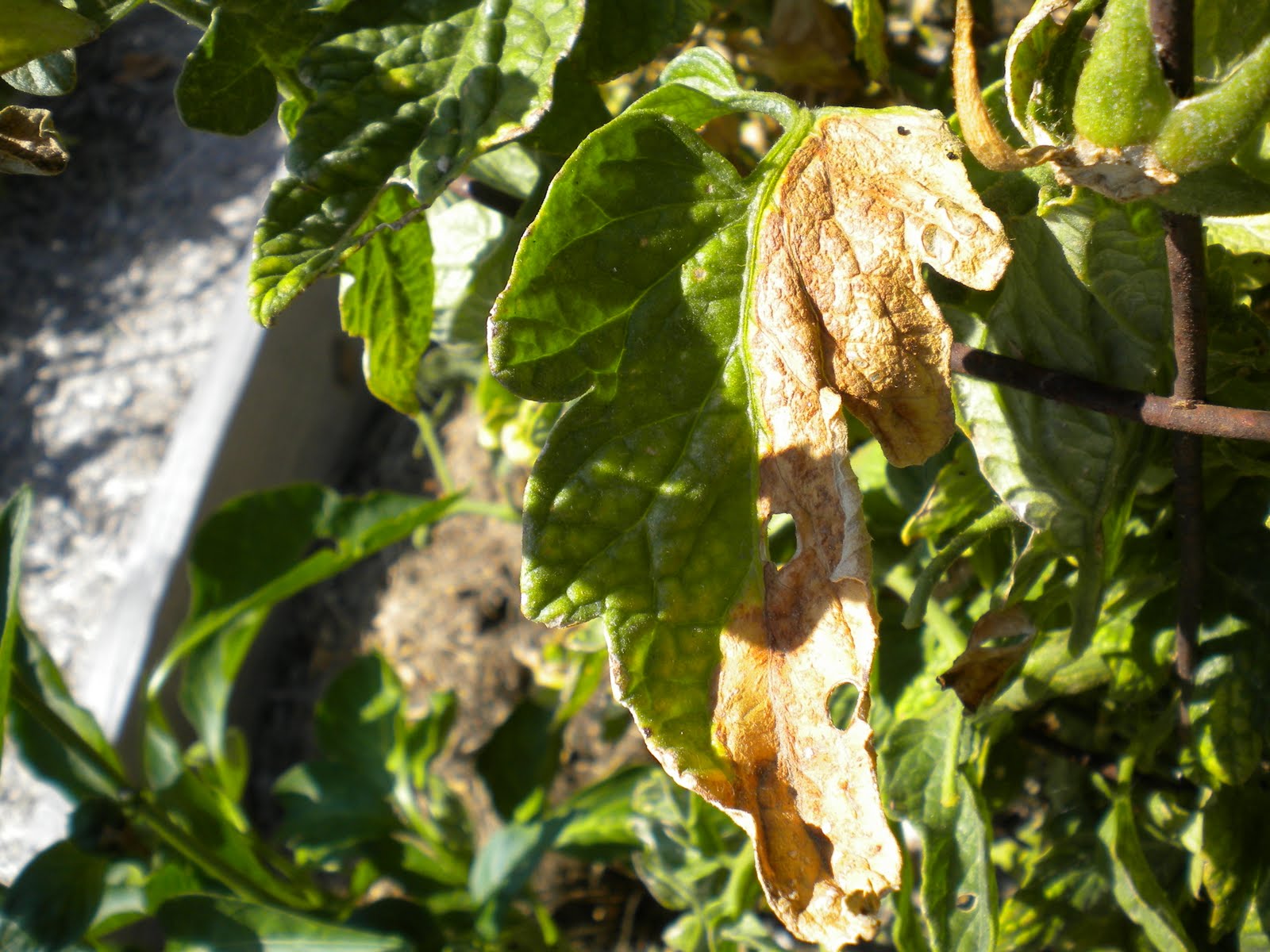 You thought I forgot about my tomato problem, didn't you?!? I took closer pictures of my tomato plant, so you can see what the damage looks like.
 This is on one side of the plant, right in the middle. It is western facing, and the afternoon sun was cooking the newly exposed green tomatoes, so I put up some sun cloth to protect the fruit--hopefully, I will be able to harvest good tomatoes before the plant completely dies.
 After looking into this problem, I believe this is Fusarium Wilt (FW). It probably came in with the plant from the nursery, as I have never had this problem before. The best prevention of FW is to grow FW resistant varieties. Generally, commercially grown plants are free of viruses and wilts, but maybe not this time. I was really impressed with this tomato plant up until this time--it had a lot of fruit and healthy growth. Now, I need to be careful and not grow tomatoes here for 5-7 years, as the FW will live in the ground that long.

